Special Announcements:
A new publication is forthcoming, November 2026: 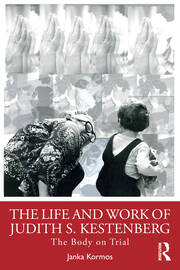
**CALL FOR STUDY PARTICIPANTS--Marie-Curie Postdoctoral Project**
As part of the project’s commitment to transdisciplinary exchange, we are currently seeking expressions of interest from colleagues, researchers, clinicians, artists, movement practitioners, and graduate researchers who may wish to participate in a Transdisciplinary Study Group beginning in spring 2027. The Study Group will convene an international transdisciplinary group online for 12 sessions over an 8-month period. The study group will provide a space for collaborative reading and dialogue across fields concerned with embodiment, movement, affect, subjectivity, semiotics, non-verbal communication, and early relational experience.
We warmly welcome interest from individuals working in or across:
- psychological and mental health humanities,
- history of psychological sciences,
- psychoanalysis and psychotherapy,
- psychosocial and community support,
- developmental psychology,
- somatic and movement-based practices,
- dance and performance studies,
- feminist and critical theory/women and gender studies
- migration and refugee studies.
Please voice your interest by emailing:
kormos.janka@ucy.ac.cy
Last Call:
KMP Analysts Janet Kestenberg Amighi, Susan Loman, and Mark Sossin: Panel on Violence Prevention
Welcome to the Kestenberg Movement Profile:
Body movement descriptions and interpretations

The second edition of The Meaning of Movement (2018) is now available for purchase!
Click here for a link to the publisher:
https://www.routledge.com/The-Meaning-of-Movement-Embodied-Developmental-Clinical-and-Cultural/Kestenberg-Amighi-Loman-Sossin/p/book/9781138484634
Click here for a link to the publisher:
https://www.routledge.com/The-Meaning-of-Movement-Embodied-Developmental-Clinical-and-Cultural/Kestenberg-Amighi-Loman-Sossin/p/book/9781138484634
Who is the KMP for?
*Dance/movement and body-oriented (psycho)therapists can incorporate into mental health assessment and treatment for children, adolescents, and adults
*Parents can foster healthy development and prevent/manage challenges
*Educators can learn how to support people with different learning styles
*Health care professionals can learn markers of psychological milestones
Why use the KMP?
The body and its manner of moving not only reveals an individual's feelings and emotions, but can give us insight into an individual’s past.
ALL life experiences get stored in the body and are reflected in body movement. A person who feels rejected may develop a hollow, narrowed body attitude which expresses and reinforces such feelings throughout life.
Because both physical and emotional experiences leave long term traces upon the way people hold themselves and move, the study of movement opens a door to understanding patterns of early development, coping strategies and personality configurations, and how to heal psychological traumas.
T